Ideas for Progress: What About Nevada Communities Trying A Prenatal and Infant Cash Prescription Program?
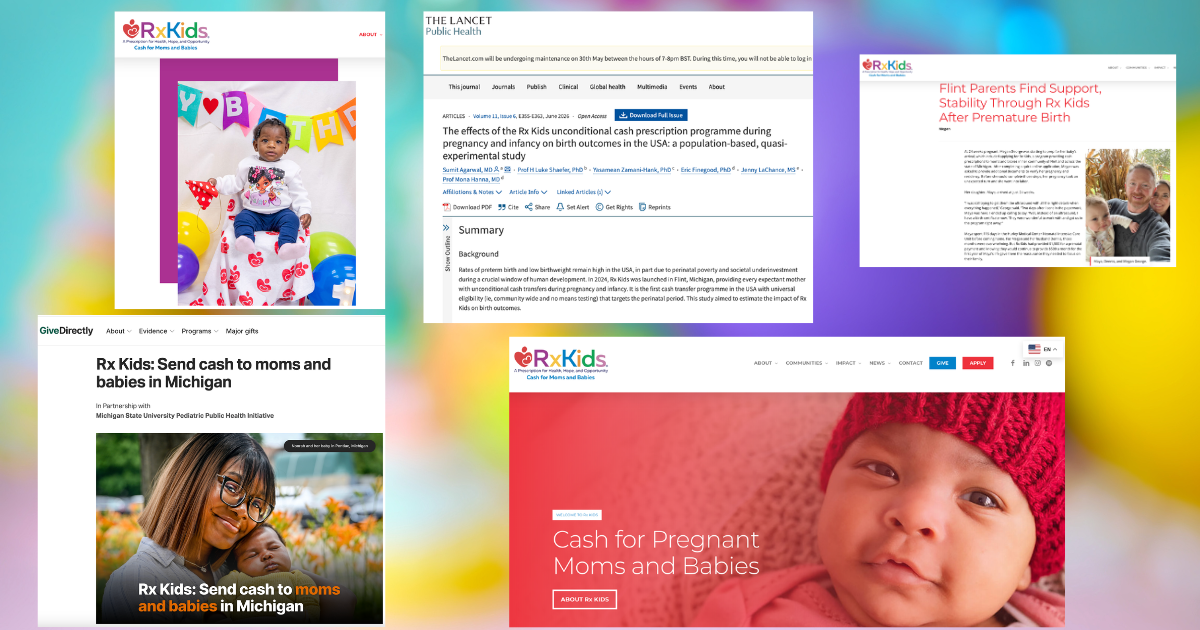
The Rx Kids program in Michigan is getting rave reviews in media coverage and in studies, earning it a spot in our Ideas for Progress of why wouldn’t we try that in Nevada category.
The program, the nation’s first community-wide prenatal and infant cash prescription program, guarantees pregnant women a lump $1,500 sum payment during pregnancy and $500 per month from six months to up to the first year of the child’s life.
The only requirement is to be at least 16 weeks pregnant and to live in a participating Rx community.
Report after report shows it has enhanced maternal health and the baby’s well-being in their crucial developmental first year of life. This includes reducing low birthweight and preterm birth rates, as well as lowering admissions to neonatal intensive care units. In terms of families it has meant more housing stability, much higher maternal mental health and less food hardship.
Studies have show it also benefits the broader local economies, adding jobs and giving local economies a boost.
The program was first piloted in Flint, and then expanded to dozens of other communities across Michigan helping more than 11,000 families.
According to collected data, 84% of families say it helped them make ends meet and feel more financially stable. 97% of participating babies have attended at least one pediatric appointment, and 64% of mothers say it helped them get the healthcare they needed.
A June 2026 The Lancet Public Health article is called “The effects of the Rx Kids unconditional cash prescription program during pregnancy and infancy on birth outcomes in the USA: a population-based, quasi-experimental study
“In 2021–23, the 3 years before the implementation of Rx Kids, 15·1% (445 of 2940) of births in Flint were preterm and 15·8% (465 of 2943) were low birthweight. Relative to the matched cities, Rx Kids was associated with a decrease in the preterm birth rate by 2·7 percentage points (95% CI –4·6 to –0·8; p=0·0075) and in the proportion of infants born with low birthweight by 4·2 percentage points (–6·0 to –2·4; p<0·0001). Corresponding to these reductions, Rx Kids was associated with fewer admissions to the neonatal intensive care unit by 4·4 percentage points (–6·5 to –2·4), less smoking in the third trimester (–1·7 percentage points [–2·4 to –0·9]), and more adequate prenatal care (5·7 percentage points [1·8 to 9·7]). The improvements in low birthweight, very low birthweight, very preterm, smoking in the third trimester, and prenatal care adequacy were most robust to alternative model specifications,” a summary of the findings indicates.
It was carried out by researchers from Michigan State University and the University of Michigan who analyzed approximately 4,500 births in Flint between January 2021 and June 2025, and then compared outcomes before and after the launch of Rx Kids to those in similar cities in the state without the program.
“More potent than any prescribed pill, Rx Kids aims to improve health, hope, and opportunity. For many families, income plunges and expenses spikes right before a child is born and remains high throughout the first year. Built on the tremendous success of the expanded Child Tax Credit, which cut child poverty to its lowest level in recorded history, and in line with global evidence, Rx Kids boldly reimagines how we care for each other by walking alongside families during the challenging time of pregnancy and infancy,” the RxKids website indicates.
“Originally launched in Flint, Michigan in 2024, Rx Kids has expanded to reach thousands of families with millions in direct cash support. This no-strings-attached support is transforming health and economic outcomes for families.”
The program is funded through a public private partnership combining government support, including federal dollars from TANF, with state and municipal government funding, as well as philanthropic investments.
Even Republicans are getting behind it such as State Representative Mike Hoadley who said in December: “In Flint, Rx Kids has created jobs and delivered a strong economic return to the local economy. That kind of impact shows the power of family first solutions, and I am hopeful that bringing Rx Kids to Gladwin County will provide the same boost to our local families and communities.”
Recent studies indicate Nevada ranked 49th overall out of 50 states and the District Columbia in a best places to have a baby ranking, with many areas lacking adequate maternity care providers and birthing hospitals, as well as ranking near the bottom of states in terms of practicing OB/GYNS, midwives and family medicine physicians.
Wouldn’t we be a good place to try this type of program out as well?
Feel free to share this Ideas for Progress article on below social media: