Far From Home: How UNR’s International Athletes Learn to Adapt, Compete, and Belong

Reporting and photos by Matthew Means.
Grégoire Valente stands alone near the baseline inside the McArthur Tennis Center, bouncing a ball against his racket as practice winds down. Teammates call out to one another across the courts, their voices echoing through the facility. For Valente, a junior from Aix-en-Provence, France, the sounds are familiar now. When he first arrived in Reno ahead of the 2022 season, almost everything was a culture shock.
International athletes who choose the University of Nevada, Reno come to compete, while adapting to a new academic system, a different team culture, and a way of life far removed from home. While the university does not publicly track an exact number of international athletes, Nevada’s rosters across sports such as tennis, basketball, and track and field consistently include competitors from Europe, Africa, and beyond, reflecting a growing global presence within Wolf Pack athletics.
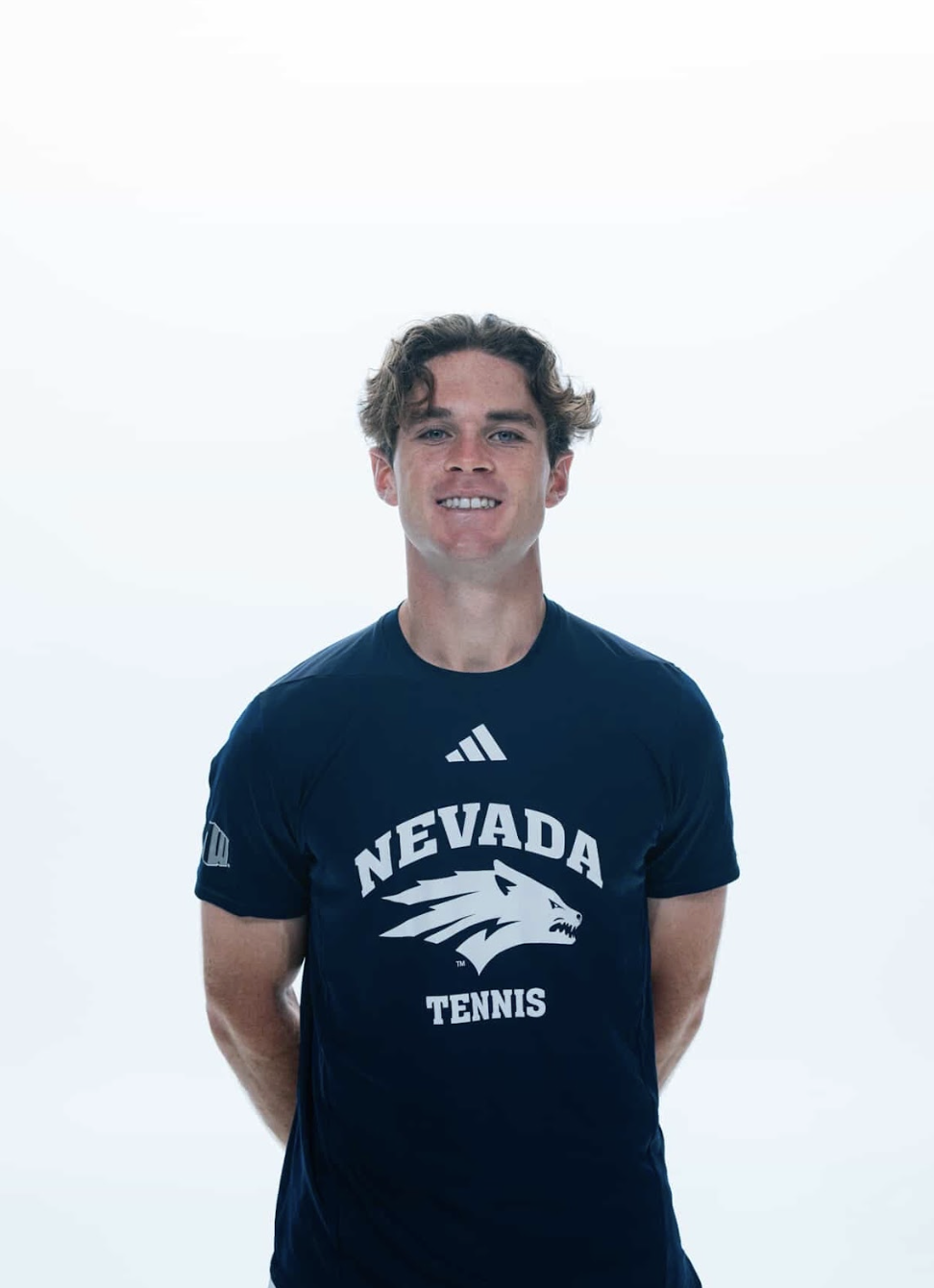
Nationally, that trend is well established. According to the NCAA, more than 21,000 international student-athletes currently compete across all divisions of U.S. college sports, dealing with immigration restrictions, cultural adjustment, academic expectations, and unfamiliar competitive structures, while contributing leadership, global perspective, and cohesion to their teams.
For Valente, the transition began the moment he arrived in Reno.
“Being far from home and family, living alone for the first time, and dealing with the language barrier were all big adjustments,” Valente said. “Everyday life felt completely new since the food, the school system, and the lifestyle in the U.S. are very different from those in France.”
The competition itself required another layer of adjustment. In France, Valente said, tennis is largely an individual pursuit. In Nevada, individual matches directly impact team results.
“Here, you represent a team and a university,” Valente said. “Your result directly impacts the whole team. That makes the competition more stressful, but also more intense and supportive.”
Nevada’s tennis programs have long reflected that international reach. Past men’s rosters have included athletes from France, Israel, Benin, Spain, and New Zealand, while women’s tennis has featured players from Germany, Romania, Slovakia, Tunisia, and France — evidence that Reno continues to attract global talent despite its smaller-market location.
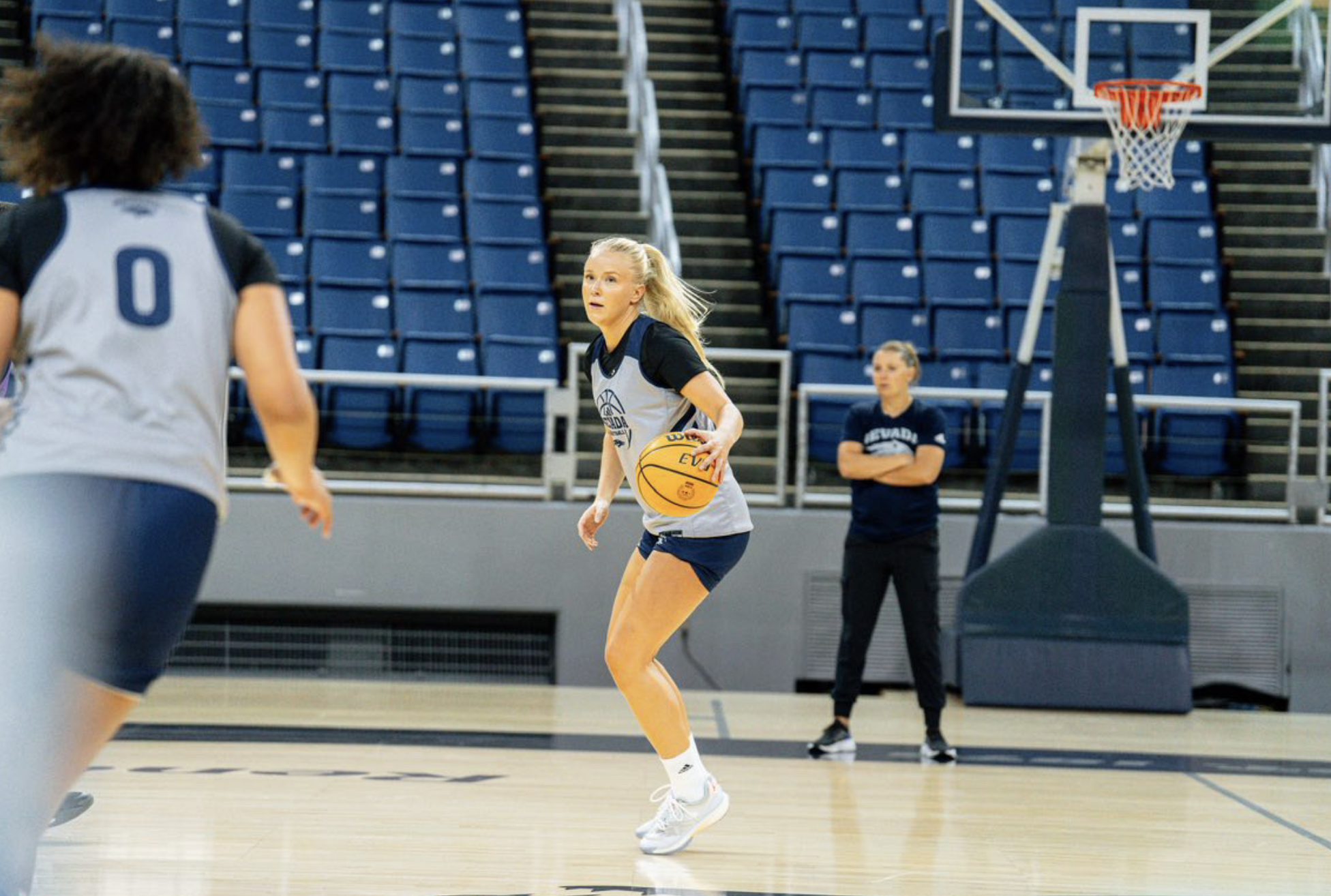
On hardwood courts close by the tennis center, during a game night inside Lawlor Events Center, Hanna Jolinder sits on the bench during a timeout, leaning forward as coaches diagram the next possession. The freshman guard scans the court, adjusting to the speed and physicality of Division I basketball — a contrast from what she knew growing up in Sweden.
Jolinder, from Stockholm, committed to Nevada without ever visiting the campus in person, a recruiting reality that has become more common as virtual evaluations and video calls replace traditional visits.
“I chose Nevada because I thought the staff seemed professional and the facilities looked great,” Jolinder said. “After many FaceTimes, I could see the whole school and get a good feeling.”
According to her Nevada Athletics biography, Jolinder developed through Rönninge Gymnasium and Sweden’s national youth basketball system before arriving in Reno, a pathway that prepared her for high-level competition but not necessarily for the American classroom.
“The school system shocked me — there is so much homework here, while in Sweden you make sure to do everything in class,” Jolinder said. “The language was hard at first since I felt I couldn’t express what I wanted to express, but it got easier fast.”
Despite the adjustment, Jolinder said the experience has been meaningful.
“Meeting a lot of new people was overwhelming but very fun,” she said. “Even though some expectations weren’t met, I’m really glad I made this decision since it gives me more experience as an athlete and a person.”
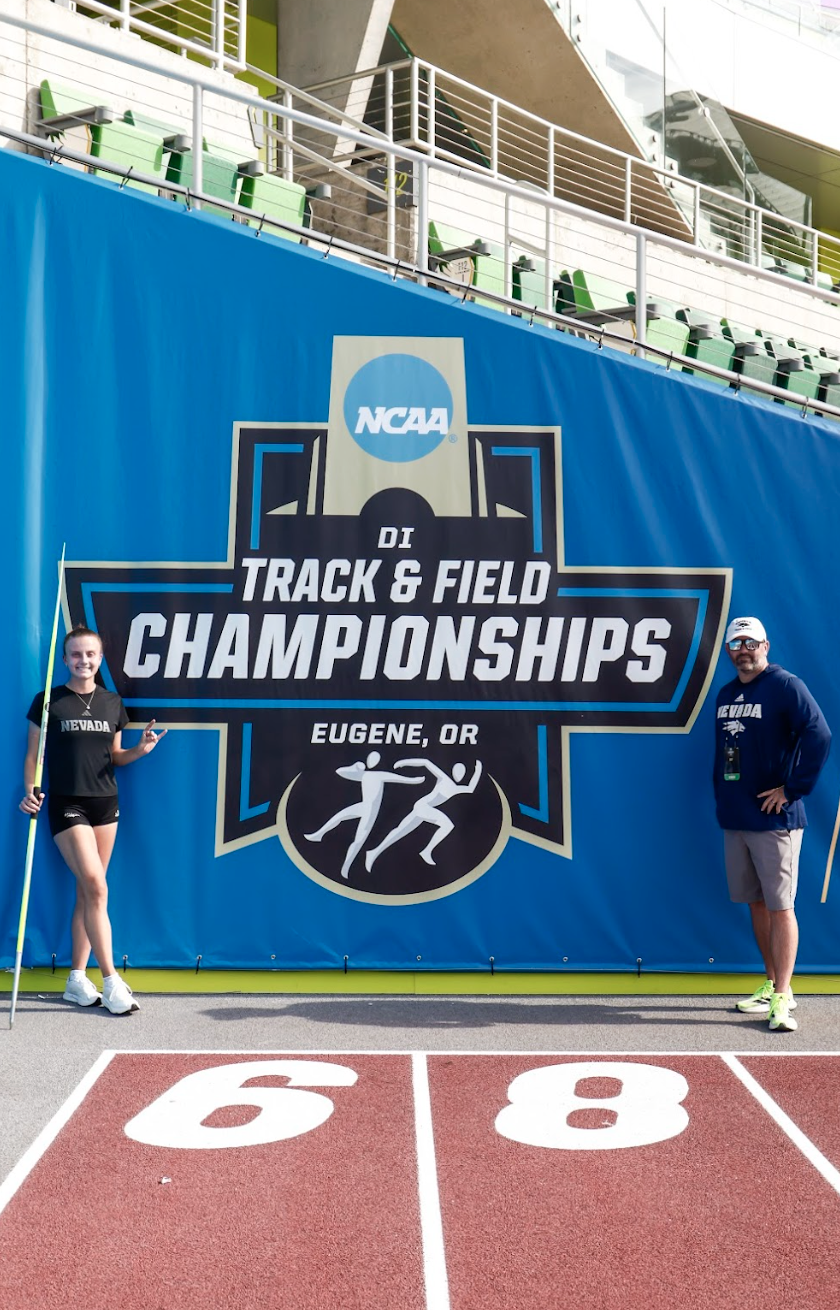
Outside near Christina M. Hixson Park, junior javelin thrower Lilly Urban approaches the runway, resets her grip, and launches another throw into the Nevada sky. Urban, from Frankfurt, Germany, joined Nevada’s track and field program mid-semester in 2024, arriving with international competition experience but little familiarity with NCAA team culture.
“I chose Reno because it felt homely, and I really liked Coach Scott Williamson,” Urban said. “[Nevada track and field star] Nicola Ader was here at the time, and she was also German. Johanna Haas was already here, too, so knowing there were two other Germans on the team definitely played a role.”
According to her Nevada Athletics profile, Urban has emerged as one of the Wolf Pack’s top javelin competitors, breaking school records and earning nationwide recognition, placing 11th at the 2025 NCAA Championships. Off the field, however, the transition required adjustment.
“I’m used to traveling a lot, and I feel at home pretty quickly in new places,” Urban said. “But the food, living situation, and studying at an American university were still very different.”
Team dynamics proved to be one of the biggest changes.
“Where I’m from, track is not really a team sport,” Urban said. “I had trouble acting in a team environment and getting along with new people at first, so that was something I had to adjust to.”
NCAA data shows that international athletes represent competitors from more than 120 countries across Division I and II programs, underscoring how global recruitment has become a stable feature of college sports. For many athletes, the United States offers a unique model in which elite competition and higher education are intertwined — an opportunity that is rare in many parts of the world.
That opportunity, however, comes with limitations. A 2025 legal analysis by Hunton Andrews Kurth found that international athletes on F-1 visas face strict restrictions related to employment and Name, Image, and Likeness opportunities, placing them at a disadvantage compared to domestic athletes as college sports continue to evolve.
Even so, international athletes at Nevada continue to succeed academically. A 2025 Nevada Today report noted that more than 90 Wolf Pack athletes earned Academic All–Mountain West honors in the spring semester, reflecting the university’s emphasis on academic support alongside athletic development.
For athletes like Valente, Jolinder, and Urban, adapting to Reno extends beyond learning a new system or competing at altitude. It requires redefining identity in a new country, classroom, and team environment.
“I had to step outside my comfort zone in every way,” Valente said. “But adapting made me grow. I met new people, and I learned a lot about myself.”
Feel free to share this article on below social media: