A New Era of Supplements Hits Local Gyms with Dubious Influencer Peddled Peptides Leading the Way
Reporting by Tommylee Spurger
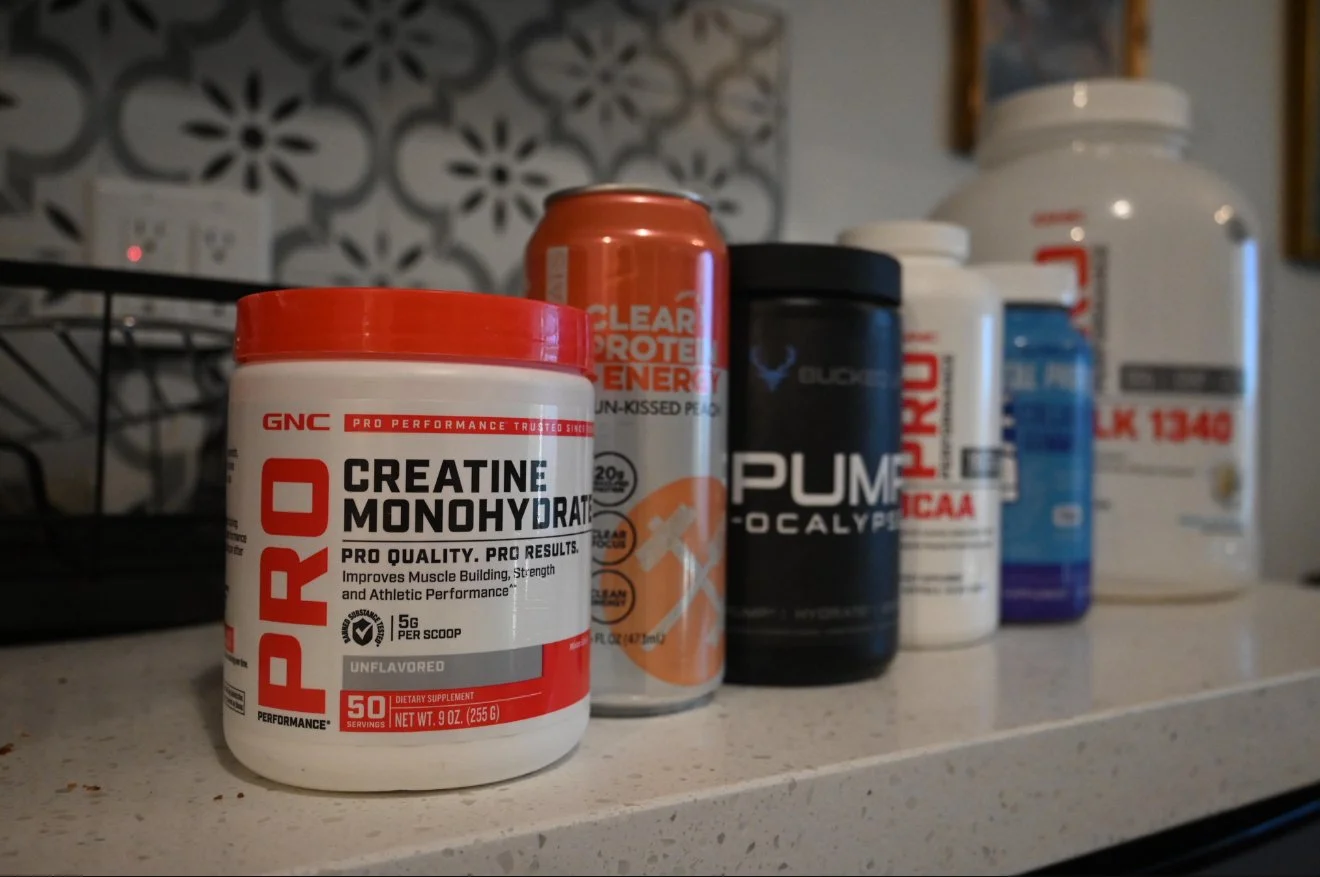
Anna Moss ties her laces and gears up for an intense workout before she heads to the gym, but first she heads to the cupboard. There she finds the plethora of supplements that apps such as TikTok and Instagram influenced her to buy.
The popularity of workout supplements has grown among young gym participants in recent years, with hawkers selling products with complicated names from podcasts to social media begging the question: what is actually beneficial to the body and what’s a scam?
Moss is a student at the University of Nevada, Reno, and also a Strongman competition participant. She has been going to the gym avidly for over three years now.
“The supplements that I use are creatine and pre-workout. I’ve experimented with various vitamins and other supplements, but none that I continued to buy,” she said.
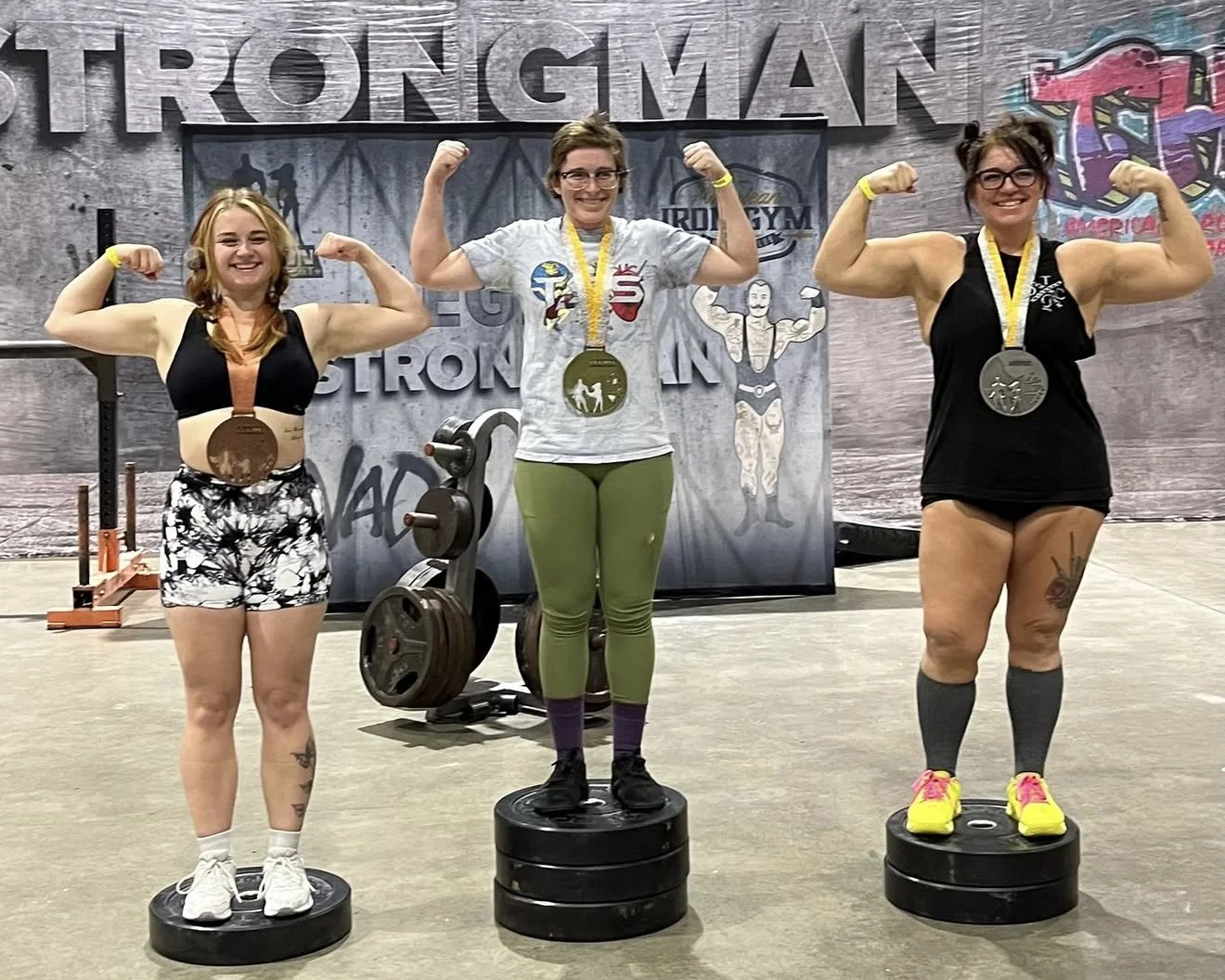
Anna Moss (left) competed in a recent regional strongman competition
“There are so many non-tested supplements being sold on Instagram or TikTok that have no proof of effectiveness. These brands are definitely taking advantage of young gym goers,” Moss said.
Supplements such as creatine have been widely popular in athletics for decades with its benefits having been tested and proven by athletes as well as doctors. But the risks grow when other supplements are being marketed at discount prices from non-credited companies that are promising unproven results.
“I was mainly influenced by social media. I think that if it wasn’t for Instagram and TikTok I wouldn’t know about half of the supplements I know now,” Moss said.
“It’s definitely used as an incentive to go to the gym more often. When you buy a $60 supplement and take it everyday it builds discipline to make sure you go to the gym.”
The craze with supplements is accompanied by “looksmaxxing” with young people trying to fit in within beauty and muscle standards unrealistically set on social media. Techniques being touted vary from workout and skincare routines to injectable peptides that promise to grow muscle mass, reduce fat and even change facial features with bone marrow techniques.
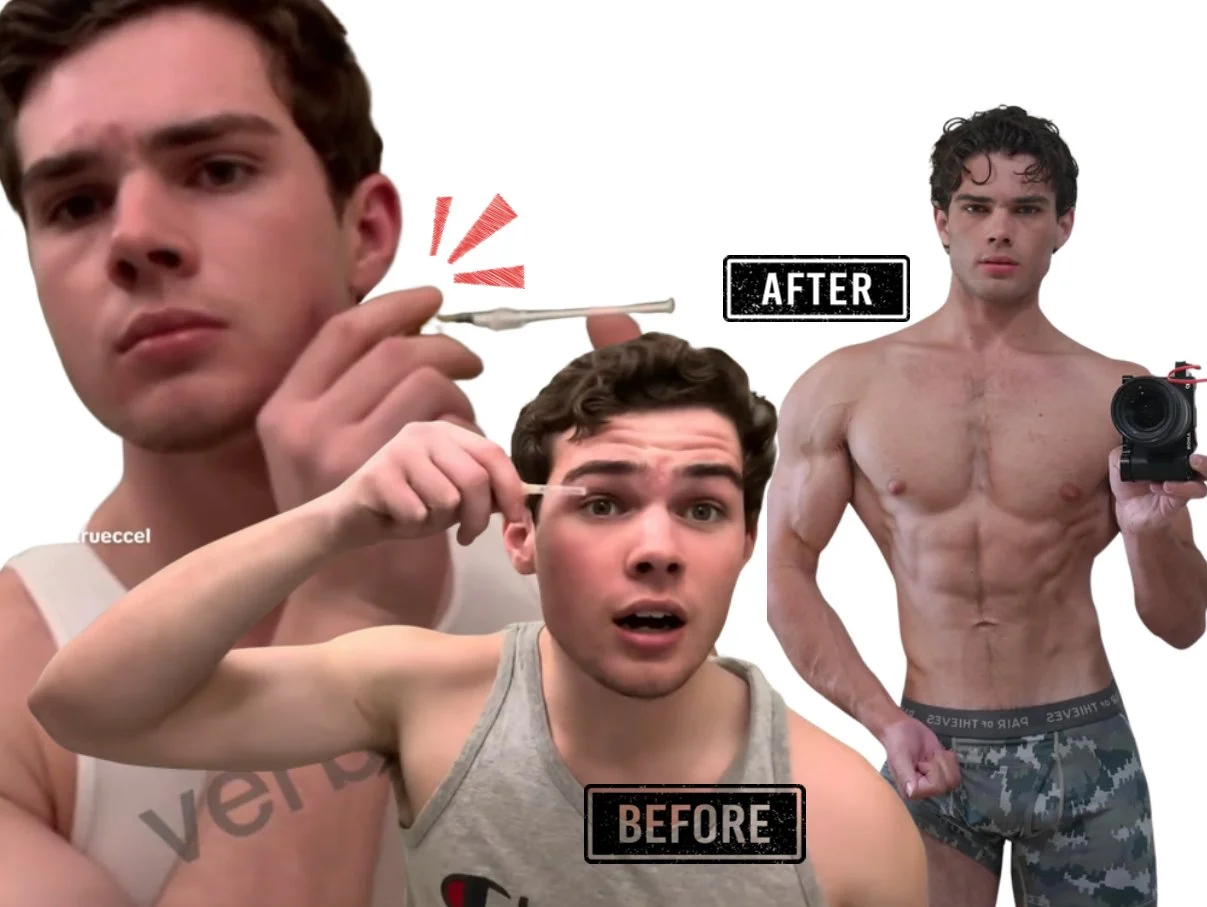
“Looksmaxixng” influencer Clavicular before and after his transformation.
Popularized by the influencer known as Clavicular, this new trend has slowly taken over the internet with young men documenting their journey of becoming more attractive in their own viewpoints through the use of various methods, or as they like to call it, “ascending”.
“When you are not attractive, your life is hell,” Clavicular says via his streaming platform on Kick.
The 20-year-old social media influencer and streamer associated with the "looksmaxxing" subculture, whose real name is Braden Peters, is known for rating people's appearance with pseudo-scientific language and aligning himself with other social media creators in the so-called manosphere. Clav has documented his process of injecting peptides, steroids and has even gone as far as saying he plans on getting jaw reconstruction surgery.
The peptides he has recommended to his large audience have hit the community of gym goers, the most popular being GHK-CU and Reta, two of which advertise clear skin and weight loss. The use of peptides are not new, but the means by which people are going to get a hold of these peptides are.
Peptides are basically short chains of amino acids, or the fundamental building blocks of proteins which act as messengers and signaling molecules that regulate vital bodily functions such as metabolism, hormone production, and immune response.
Over the counter peptides prescribed by a doctor can cost upwards of $1200 per month. However many people are turning to third-party websites that promise better results at a fraction of the price.
Websites such as “researchem.com” come and go offering a supply of peptides and other products.
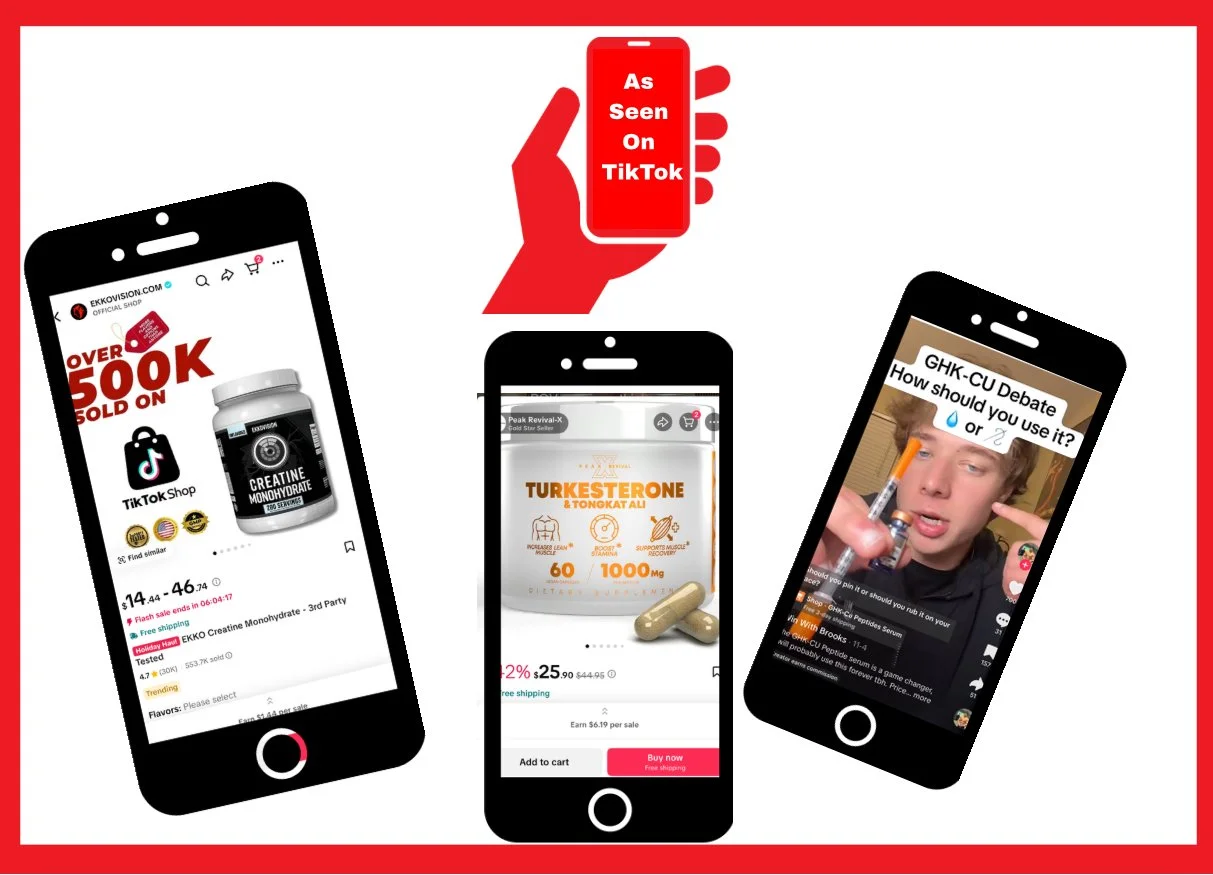
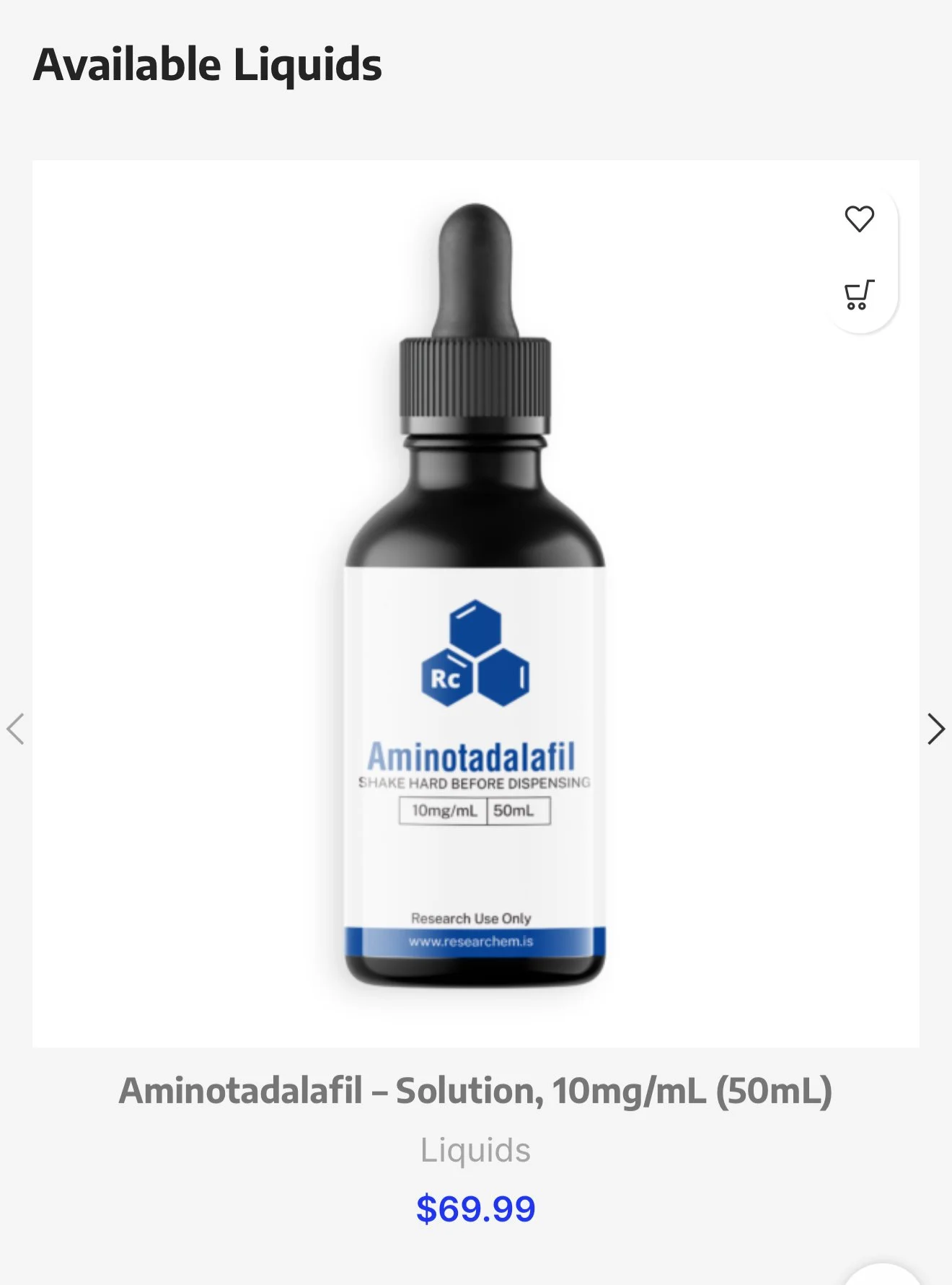
Note the “for research purposes only” label, indicating that these supplements are not safe for personal use.
With influencers taking the position of doctors and sports nutritionists, it is becoming more and more difficult to differentiate what’s true and what are marketing schemes when it comes to gym supplements.
Cole Harris is a fitness instructor and University of Nevada, Reno, graduate who studied Public Health. He is a firm believer that it’s not what’s in the bottle that’s going to give you your dream physique, but rather what’s on your plate.
“I would say, do your research, because a lot of the research doesn't exist.” Harris said when asked about how he felt about the use of supplements in the gym community.
“I feel like a lot of supplements aren't really needed at first. If you're sleeping for eight plus hours a night, and you're eating well, and you're consistent in the gym, and you've been doing that for some time, then maybe start to incorporate those supplements. I think a lot of people start using supplements when they're not doing the right things to begin with,” Harris said.

Harris shared his own personal experiences with testing out supplements. While he never went down the road of performance enhancers, he did try out a couple of the more popular methods seen among the gym community.
“I did use creatine. I just really couldn't commit to it…I found that when I was eating, like actual animal protein, like chicken, steak, ground beef, pork, salmon, when I was eating enough of that in my lunch and dinners, eggs for breakfast, I felt way less sore the next day and more ready for each workout than I did when I was using protein powder,” he said.
Dietitians have also taken notice of the craze, such as Justine Habibian, who has trained athletes in soccer and swimming at UNLV. Habibian now shares her expertise among students at UNR as a teaching assistant professor for Sports Nutrition.
In her time working with athletes she focused on optimizing their nutrition and performances through their diets, including the use of creatine.
“So the problem is, is there's this misconception that it's like, it adds bulk, and it can, it can mask up in the form of fluid retention, because we store it in our muscle, but it can increase muscle size and mass, because it gives you the energy to be able to effectively increase your repetition and speed and, you know, muscle power,” Habibian explained.

When the growing use of peptides was brought to Habibian’s attention, not much shock was expressed, but neither was any conviction.
“I can't say yea or nay to the effectiveness of peptides. I don't think there's any any evidence to support that it influences that like bone marrow and creates more like definition in your face. There is something that with muscle mass, right? There's a lot of evidence that supports recovery use, but that's, again, if you're actively moving and exercising, right? These could potentially just be supports to that, not bypassing the actual work,” she said.
Habibian warned against the influencer and marketing driven controlled environment we operate in.
“We do want it in that safety. If there's medical staff on board, nurse practitioners, or even a physician assistant, I still would trust them more than a marketing agency,” Habibian said.
While influencers such as Clav can push the boundaries of gym aesthetics and try to influence others to take his approach, others such as Anna Moss urge others not to be so easily influenced.
“It’s so much more worth it in the end to stay authentic. It’s your body and your own hard work,” Moss concluded.