A plea by a former inmate to have enhanced pen pal programs and wellness checks for the incarcerated in our region
A Citizen's Forum contribution by Don Hamby:
I’ve been thinking a lot about the inmates that nobody ever talks about.
I’m not talking about inmates who have family, money on their books, phone calls, visits, jobs, or people writing them. I’m talking about the men who have absolutely no one.
I spent time in the hole at Southern Desert Correctional Center, and while I wasn’t housed in those units at High Desert or Ely, I heard about situations there.
Those are high-security yards with inmates who are considered too dangerous to be around other people, so they’re locked away for years. The problem is that the longer you isolate a human being, the worse it gets. Eventually, they’re not just serving time—they’re simply existing, barely.
People suggest books, television, or religious material, and those things certainly have value. But that’s not what I’m talking about.
I’m talking about human contact.
A book can’t ask you how you’re doing.
A television can’t remind you that someone still cares whether you’re alive.
Some of these men have no family left. Some have nobody willing to answer a phone. Some don’t have any money because they can’t work due to their custody level. Without money, they can’t buy stamps, envelopes, or writing supplies.
They don’t have addresses. They don’t have phone numbers memorized. They have no way to start a conversation with the outside world, even if they desperately want to.
Meanwhile, there are inmates sitting in cells right now—as you’re reading this—who have been there for years. Most people don’t even know they exist. There isn’t a public list where ordinary people can simply say, “I’d like to write someone who has nobody.” If there were, I’d write every single one of them.
These men aren’t just sitting in a cell.
For many of them, their entire world has become four walls, three meals a day, and a cot.
Whether someone deserves to be in prison is a separate conversation. Prison is the punishment. Complete human abandonment doesn’t have to be.
And yes, some of the people I’ve met were guilty. Some weren’t. Some may have been convicted after making terrible decisions. Others may have accepted plea deals they didn’t fully understand. Some never had the money to hire an attorney.
Some didn’t understand the legal system well enough to defend themselves. Some struggled with mental illness or intellectual limitations that made navigating the system almost impossible.
One man I met has stayed with me ever since.
He told me that another man tried to attack him with an axe while drunk. According to him, the man stumbled, fell backward, and landed on the very axe he was holding. He said that when he tried to pull the axe away, it caught beneath the man’s neck. The man died, and he suddenly found himself facing first-degree murder charges.
I wasn’t there, and I can’t say what happened beyond what he shared with me.
But I do know this: he truly believed no one understood his side of the story.
He had no family.
He lived by the river.
Everyone he loved had already died.
He had no money.
He had no resources.
He couldn’t afford a private attorney.
He didn’t have the education or the mental capacity to understand how the legal system worked. He honestly believed that if he simply told the truth, everything would work itself out. He didn’t understand how evidence is presented, how criminal charges are defended, how plea negotiations work, or what his legal options really were.
I remember sitting there thinking, “This man doesn’t have a chance.”
Whether his account was completely accurate or not, I can’t say.
But I could see that he was completely overwhelmed by a system he wasn’t equipped to navigate. He had no one standing beside him, no one explaining things in a way he could grasp, and no one outside those walls advocating for him.
Eventually, he disappeared into the prison system, and I never saw him again. His name was Billy. I regret to this day not getting his information.
To everyone else, he may have just become “crazy Bill in cell 39.”
To me, he was another human being who seemed completely lost in a system he wasn’t equipped to navigate.
And I still wonder how many more men just like him are sitting alone in prison cells today, with no one to write to, no one checking on them, and no one who even knows they’re there. Most are on restriction from messaging systems. Some have no emails to add or numbers to call.
I don’t have all the answers, and I don’t pretend to know exactly what the solution is.
But I do know this:
There has to be a better way.
There has to be a system that reaches the inmates no one else can reach.
Maybe it’s a petition.
Maybe it’s legislation.
Maybe it’s a prison policy that changes.
I don’t know what form it should take, but I know we shouldn’t keep pretending this isn’t happening.
I believe every inmate, regardless of their custody level or security classification, should have a meaningful wellness check every single week.
Not just paperwork. Not just moving them from one cell to another. An actual conversation with someone whose job is to make sure that inmate hasn’t simply disappeared mentally and emotionally behind a steel door.
They should be asked simple questions.
“Do you have anyone to write to?”
“Would you like a pen pal?”
“Do you need envelopes, paper, or stamps?”
“Is there anyone you’d like us to help you contact?”
If an inmate has no money, there should be a basic correspondence allowance. A few sheets of paper. A few envelopes. A few stamps. Enough to give them a chance to reach another human being. But more importantly, another human being to reach.
If security concerns make that difficult, then let the caseworker be the bridge. Let the inmate write the letter and turn it in. Let the caseworker mail it. Let incoming letters be routed back through that same process. However it has to work to maintain safety, there has to be a way.
I’m not asking anyone to ignore what people have done.
I’m asking us not to ignore that they’re still human beings.
Some of these men have spent years talking to almost no one.
Some have no family.
Some have no friends.
Some have no money.
Some have absolutely no hope.
Human beings were never meant to live like that.
I don’t know how to build this program.
I don’t know how to get the laws changed.
I don’t know how to organize the petition.
But I do know one thing:
I’m not going to pretend this isn’t happening.
Because it is.
Right now, as you’re reading this, there are men sitting alone in prison cells with no one to write to, no one checking on them in any meaningful way, and no one on the outside who even knows they exist.
That isn’t about making prison easier.
It’s about refusing to let another human being disappear.
If we’re ever serious about rehabilitation, accountability, or basic human dignity, then we have to find a way to reach the people everyone else has forgotten.
Because when someone is locked behind a steel door for years with nothing but three meals a day, a cot, and silence, we shouldn’t be surprised when they come out more broken than when they went in.
There has to be something better than this.
There has to be a way to reach them.
And until there is, I’m not going to stay silent and act like this isn’t happening.
Because it is.
And it’s cruel.
It’s devastating.
And it’s happening to human beings.
Don Hamby #1262429
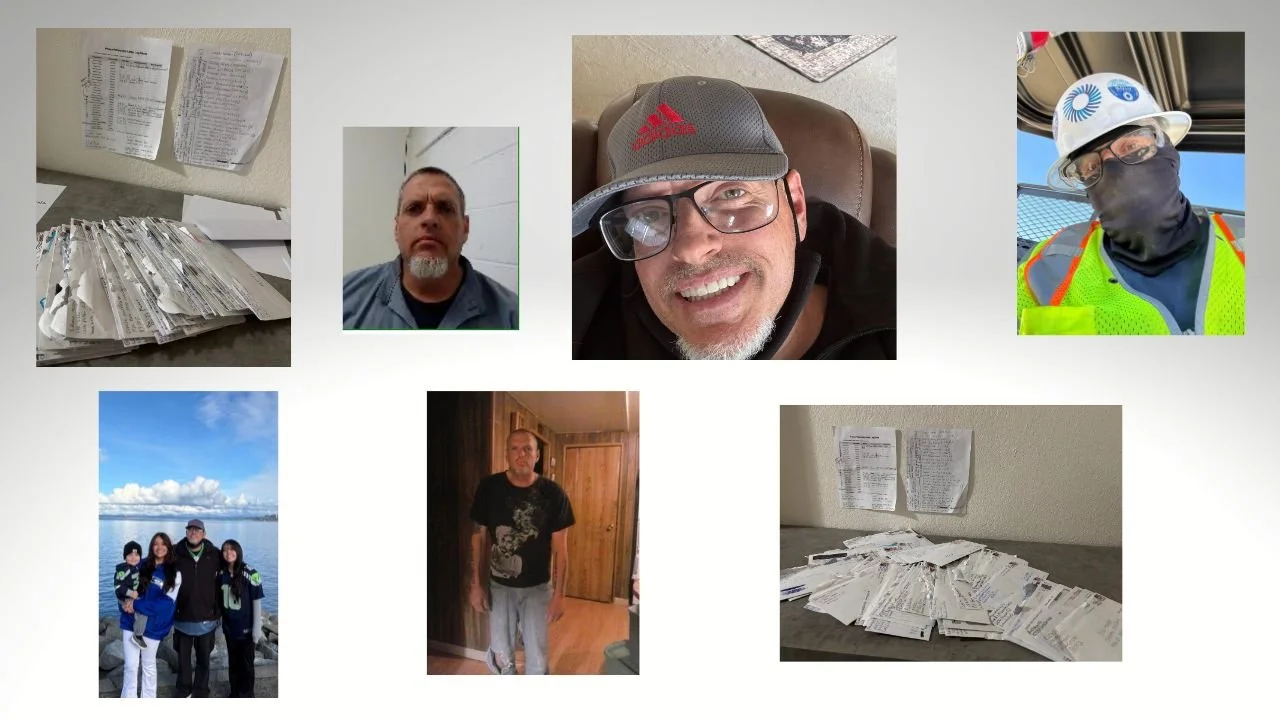
On January 27, 2022, I was arrested after years of living in addiction. For more than a decade, alcohol and methamphetamine controlled every part of my life. There were times I slept outside a liquor store waiting for it to open because getting my next drink was all that mattered. I had lost my direction, my purpose, and eventually my freedom.
I was convicted of battery resulting in substantial bodily harm and spent approximately 22 months in the Nevada Department of Corrections, housed at Northern Nevada Correctional Center (NNCC) and Southern Desert Correctional Center (SDCC).
Prison became the place where my life finally began to change. The day I was arrested was the last day I used drugs or alcohol. Since January 27, 2022, I have remained clean and sober. During my incarceration, I came to faith in Jesus Christ, confronted the life I had built, and committed myself to becoming a different man.
When I returned home, rebuilding wasn’t easy. Because of my felony conviction, finding work was a constant struggle. I worked temporary jobs, took whatever opportunities I could find, and kept moving forward one day at a time. Recently, I was blessed with the opportunity to join the Laborers Union, where I now work as a union laborer earning a living I never imagined I’d have just a few years ago.
Along the way, this publication helped tell another part of my story. After an article was published about my hope of smiling again, readers came together to help me receive the dental work I needed. For the first time in years, I have my smile back. I will never forget that kindness.
Today, I don’t want my story to end with my own recovery. The men I left behind are never far from my mind. Many suffer from severe mental illness, prolonged isolation, and complete abandonment. Some have no family. Some have no one to write them. Some have spent years without meaningful human connection.
I believe people should be held accountable for the crimes they commit. But I also believe rehabilitation is one of the strongest forms of public safety. Every person inside prison influences someone else. The environment we create behind those walls doesn’t stay there—it eventually reaches our families, our neighborhoods, and our communities through the people who pass through the system.
My hope is to use my own story—not to excuse crime, but to advocate for change, encourage hope, and remind people that no one is beyond redemption, and no one should be forgotten.
Feel free to share this article on below social media: