A Journey Through Dayton’s History and Pushing Through My Own Small Town Childhood
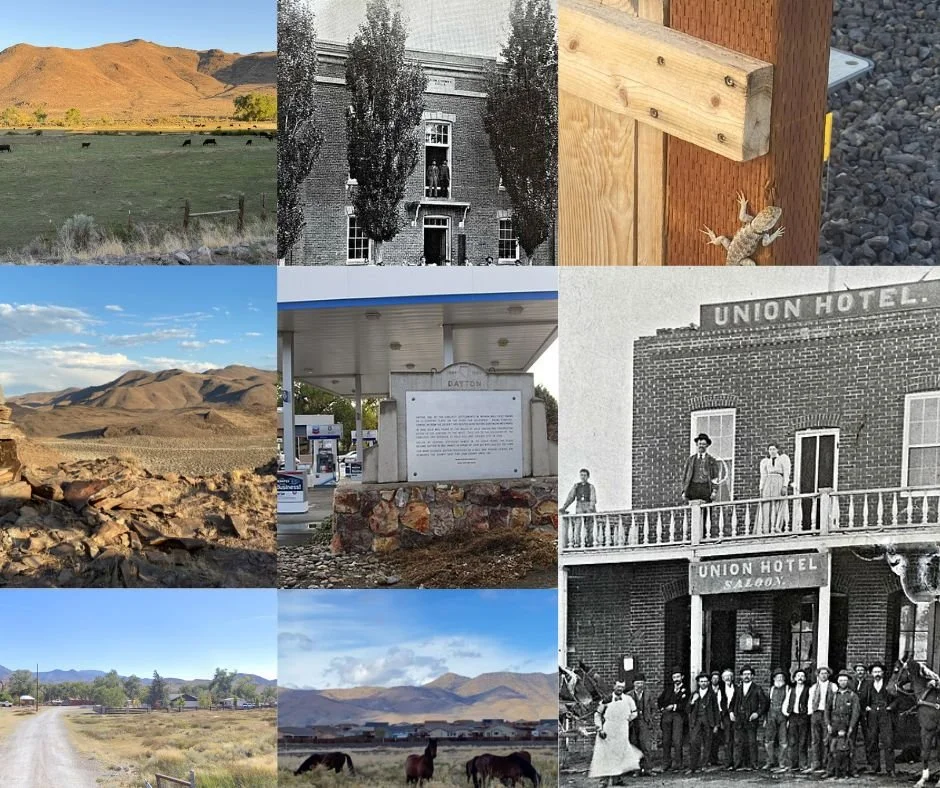
A Citizen’s Forum contribution by Kelsea Frobes
Dayton, Nevada, a small rural town located near the state’s Carson City capital, is home to more than 15,000 people. Dayton is one of Nevada’s earliest settlements, often a place where settlers chose to live during Nevada’s gold and silver rushes in search of a more prosperous life. The Pony Express Trail also once ran through several areas of Dayton, with remnants of the trail scattered throughout the town, showing a now largely-forgotten piece of American history.
The area was initially called Chinatown, established in the 1850s by workers coming from Asia, mostly from China. They were hired to build a ditch from the Carson River to the entrance of Gold Canyon, but faced severe discrimination and then economic downturn with the Comstock Lode’s eventual decline. After John Day surveyed the town, the town was renamed to Dayton in 1861.
Nearby, Virginia City is full of 1800s history, offering events that include historical reenactors, train rides and several shops where you can have your photo taken in period attire. Although Virginia City is not a part of Dayton, the two towns are often visited by each other’s residents.
Connecting Virginia City and Dayton is the Sutro Tunnel. Created by Adolf Sutro in the 1870s in an attempt to drain water from the Comstock mines, reduce transportation costs, and protect the miners’ lives, the tunnel is now only open as a tour site, with tours rarely offered to the public.
Although both towns were buzzing with activity around the same time, Dayton is now full of mostly-suburban housing developments. There is just one surviving Chinese house. A newly-renovated Odeon Saloon does still stand tall on Pike Street, bringing light back to the streets of old Dayton through public events and music. Dayton is also home to the annual Northern Nevada migration of sheep owned by members of the local Basque community.
I spent my childhood from 5 to 18 attending Dayton’s public schools, playing sports on their local teams and spending my summers hanging out with the other neighborhood kids dubbed “The Teakwood Gang.” We often played in the desert next to my house where the road that remained unfinished until late into my teens should have been.
Although growing up in rural Nevada doesn’t consist of all bad memories, the lack of opportunities for kids in Dayton always bothered me. A “big shopping day” ahead of a new school year with my mom was the same story- an almost hour-long drive to Meadowood Mall and a stop at Reno’s Barnes and Noble where I’d often buy a book I’d inevitably finish before we even made it home.
When I was younger, living in a place with nothing to do and no technology to bide my time was great. It forced me to make friends and have wildly imaginative play dates where we cut the hair off of every stuffed animal they owned like we were proud owners of some new salon.
Spending summer days at my aunt's farm, milking cows and getting chased by a mean rooster became something I looked forward to. As I got older, though, the lack of resources became more and more apparent. At the Boys and Girls Club, where almost every child without a stay-at-home parent or older sibling to babysit them attended, I grew increasingly frustrated with being trapped in a routine of the same five activities — dodgeball, coloring, playing on old gaming consoles and the occasional trip to Wild Island or to Fly High, excursions that required a trip to Reno.
Once I was old enough to stay home by myself, I quickly advocated against going to the Boys and Girls Club, to which my parents obliged. I was put in Pop Warner cheerleading, after an unsuccessful season of baseball when I was 9.
Although I liked playing sports, especially with my dad as our coach, in reality I only did baseball because Dayton got rid of their softball league the year after I joined. This became the start of throwing myself into athletics to give myself something, anything, to do besides sit at home and watch the evening news or get yelled at for my inability to solve my homework’s math problems.
In high school, of course at Dayton High, I continued to play sports, three of them, to give myself something to do. After the kids in my neighborhood moved away, making friends that understood my weird rural kid antics became increasingly harder; That became apparent when I was always the odd person out on any sports team I belonged to or when I was harassed and constantly bullied by the school’s athlete boys. Despite being close with many faculty members, even spending my lunches with them to get away from the kids making my life a living hell, most faculty members never really addressed the bullying I faced, chalking it up to the fact that I should try and “be the bigger person.”
I often reflect on why I didn’t leave my sports teams, even after having been suicidal due to the events that happened to me while I was in school, and I realize that much of that came from the fear of being bored. Transferring schools wasn’t an option, as the next closest schools were even smaller than Dayton, or were forty five minutes away from my house. In essence, my only options were to be involved in some school-related activity and deal with the bullying or sit at home- I chose to push through.
I hope things are better for Dayton’s youth now. Before I graduated in 2022, the only options for extracurriculars it seems were sports, theatre or drug use. As someone with no interest in the latter options, I stuck with sports all throughout high school, throwing myself harder into school and leadership activities when the bullying got bad with my teammates and their friends.
As a bedroom community, Dayton no longer supports settlers in search of precious metals, but now rather supports those working at the nearby manufacturing facilities like Tesla or those working in Carson City and Reno. Once I turned 16 and got a job, I myself even chose to drive 30 minutes into Carson City just to make a decent wage. Because most people don’t work and live in Dayton, there is little investment back into the community, providing a lack of youth-friendly spaces that nearby cities like Carson City or Reno offer and little to no events hosted each year.
Throughout the years, there has often been public support for a recreational center or even for a swimming pool, but as of now, those 20-year-old conversations persist with no signs of progress in sight.
Besides a lack of town investment, one issue remains: Dayton’s pressure to “keep Dayton dark.” Before putting in street lights in an effort to stop Dayton’s feral horse population from being hit, with several people killed each year, Dayton had almost no street lights along Highway 50. When street lights were proposed, locals spoke out against them in an effort to, literally, “keep Dayton dark.”
These ideologies come from the folks living in Dayton who moved there in search of an escape from more urban areas like Reno, Carson City and anywhere in California; God forbid you tell a Daytonite you’re from California, you’ll see why keeping Dayton the same forever likely isn’t a good plan.
Although I respect the want to live truly rural, keeping Dayton so rural that the youth population lacks the resources to better themselves is a detriment to the lives of Dayton’s youth and to the community itself. For those who aren’t interested in sports like I was, the resources and extracurricular activities available to Dayton’s youth become even more bleak.
I myself, despite having been extremely active in the Dayton community throughout high school (I actually won an award for speaking out on behalf of my class as a senior), didn’t even realize how my growth as a person and as a professional had been stunted by Dayton’s lack of resources for their youth.
Upon going to college at the University of Nevada, Reno, many of my peers from other cities in Nevada and elsewhere had already had several internships in our career field or had already known what they wanted to do as a career their whole lives. I only knew what I wanted to pursue because a journalism class happened to be available my senior year of high school, inspiring me to use my writing for more than just arguing with people on Dayton’s infamous “Dayton Peeps” Facebook group or writing to county commissioners about how changing the name of the road my high school was on to the name of a man who had never even been there was likely not a productive plan.
Now, as a senior in college, I’ve had to work overtime to catch up to my peers from larger cities, often working multiple internships each semester just to make sure I stand out on a list of job applicants. Even in high school, I remember other local high schools offering programs that taught kids how to work in the medical field, do a trade or that gave them the opportunity to travel to another state or country; programs we didn’t have at all or that we didn’t have as well-funded.
Thankfully, the drive to do well in school as an outlet to escape boredom, along with a persistent fear of having to move back to Dayton for the rest of my life, has resulted in a strong work ethic and a drive to succeed.
As a product of rural Dayton, Nevada, I wouldn’t say that my experience coming from such a small area has been completely bad, but I do urge Dayton’s residents to truly think about the quality of workplace-ready professionals their lack of resources produces. I’ve seen more people from school get stuck in cycles of drug and alcohol abuse than I’d like to admit. Tragically, several of these kids do not live more than a few years past graduation.
I applaud those who come into these situations and are able to have a happy life. If Dayton provided its youth with more opportunities to succeed outside of its school system, Dayton just might produce a larger population of people who become something more than just another small town kid.
Feel free to share this story on the below social media: